


Are you thinking about travelling around Thailand independently but don’t know where to start? Don’t worry! Thailand is one of the most interesting and accessible countries to explore on your own, even if it’s your first time travelling around Southeast Asia.
Impressive temples, paradise beaches, mountains, street markets, vibrant cities and spectacular food. Thailand has everything you need to make it one of the best trips of your life.
After travelling around Thailand for two months, both with friends and on my own, and living there for more than two years while working as an English teacher, I’ve had the opportunity to get to know the country from different perspectives. From the mountains in the north and the more remote provinces in central Thailand to the tropical beaches in the south.
That’s why I’ve put together this guide with my best tips for travelling around Thailand independently, based on my own experience and everything you need to know before organising your adventure.
We’ll cover visas, money, budgets, food, weather, transport, must-see destinations, safety and local customs. I’ll also share some tricks to save money and avoid the most common mistakes travellers make.
If you’re planning your first trip to Thailand, save this guide because it will come in very handy.
Let’s get started!
1. Things to know before travelling to Thailand
Before booking your flight and packing your backpack, there are a few things you should know to organise your trip to Thailand and avoid any last-minute surprises.
Visa and entry requirements
One of the first things you should check before travelling is whether you need a visa to enter Thailand. If you hold a Spanish passport, you can currently enter the country without applying for a visa in advance for tourist visits of up to 30 days.
Important! The visa-free period is no longer 60 days. Since 15 September 2026, Thailand has reduced the visa exemption period for Spanish citizens from 60 to 30 days.
If you want to stay longer, you can apply for a further 30-day extension at a Thai immigration office, although approval is at the discretion of the immigration authorities.
Before travelling, keep the following requirements in mind:
- Passport: It must be valid for at least six months from your date of entry.
- Onward or return ticket: Thai authorities may ask you to prove that you intend to leave the country within your authorised stay.
- Accommodation: Have the address of your first hotel or accommodation ready.
- Purpose of your visit: The visa exemption is for tourism. If you want to work or undertake other activities, you will need the appropriate permit.
If you hold a different nationality, check the specific entry requirements for your passport.
You can find updated information on the Royal Thai Embassy in Madrid website and in the Spanish Ministry of Foreign Affairs travel advice.
Thailand Digital Arrival Card (TDAC)
Since 1 May 2025, all foreign travellers entering Thailand must complete the Thailand Digital Arrival Card (TDAC).
This is an online form that replaces the old paper immigration card. You must complete it within the three days before arriving in the country, including your arrival date.
To fill it in, you’ll need some personal details, your passport information, flight details and your accommodation address in Thailand. You can complete the process free of charge on the official TDAC website.
Important: Don’t pay third-party websites to complete this form for you. The official form is free.
Currency and money in Thailand
The official currency in Thailand is the Thai baht (THB). Although some tourist establishments accept euros or US dollars, most everyday payments are made in baht.
You can exchange money at currency exchange offices or withdraw cash from ATMs, which you’ll find throughout the country. However, be aware that ATMs charge a local withdrawal fee, usually around €5–7 per transaction.
My advice is not to exchange all your money at the airport. You can change a small amount to pay for transport to your accommodation and then look for a currency exchange office with better rates. Bangkok is usually a good place to do this.
Here are a few recommendations:
- Compare exchange rates before changing your euros.
- Check the fees charged by your bank card.
- Carry some cash for markets, small restaurants and local transport.
- Don’t rely exclusively on cards, especially if you’re visiting less touristy areas.
One important thing to remember: Thai ATMs usually charge a local fee when you withdraw cash using a foreign card. Check the conditions before withdrawing money and, if the ATM offers to convert the amount into euros, it’s generally better to choose to be charged in baht.
Vaccinations and health
Before travelling to Thailand, it’s advisable to consult an international vaccination centre to find out which vaccines are recommended based on your itinerary, length of stay and health situation.
Not all travellers need the same vaccines, and some are only recommended depending on the activities you plan to do or the areas you intend to visit.
Vaccinations commonly considered for travel to Thailand include:
- Hepatitis A.
- Hepatitis B.
- Typhoid fever.
- Tetanus and diphtheria.
- MMR (measles, mumps and rubella).
- Japanese encephalitis, in certain circumstances.
- Rabies, depending on the length and type of trip.
The yellow fever vaccine may be compulsory if you arrive from certain countries where there is a risk of transmission. Also remember to pack a good mosquito repellent, sunscreen and any personal medication you may need.
My advice is to book an appointment well in advance, as some vaccines require several doses.

2. Budget and Thai food
One of the great advantages of travelling around Thailand independently is that you can adapt your budget to suit almost any pocket.
You can explore the country on a tight budget, staying in hostels and eating at street-food stalls, or enjoy hotels with swimming pools, restaurants and organised excursions.
That said, Thailand is no longer as cheap as it was a few years ago, especially in the most touristy areas.
How much does it cost to travel around Thailand?
Your budget will mainly depend on your travel style, the destinations you visit and the time of year.
In general, there are a few regional differences worth keeping in mind:
- Northern Thailand: Usually more affordable. Chiang Mai, Chiang Rai and Pai offer reasonably priced accommodation and local restaurants.
- Central Thailand: Bangkok has options for every budget, although hotels and tourist areas can be expensive.
- Southern Thailand: The islands and beach destinations tend to be more expensive, especially during the high season.
The expenses that can increase your budget the most are international flights, accommodation on the islands, boat excursions, domestic flights and alcohol.
Here are a few ways to spend less:
- Eat at local restaurants and street markets.
- Use public transport whenever possible.
- Compare excursion prices before booking.
- Avoid changing destinations every two days.
- Book accommodation in advance during the high season.
- Check ATM and bank card fees.
One personal tip: don’t try to save money on absolutely everything. Sometimes it’s worth paying a little extra for well-located accommodation, safe transport or an excursion with good safety standards.
What to eat in Thailand: Thai cuisine
Thai food is one of the country’s greatest attractions. It is known for combining sweet, salty, sour and spicy flavours in a very distinctive way.
The best-known dish internationally is Pad Thai, a stir-fried rice noodle dish cooked in a wok with egg, tofu or meat, sauce and different toppings. It’s delicious! However, I recommend not limiting yourself to eating Pad Thai throughout your entire trip.
Other dishes worth trying include:
- Pad Kra Pao: Stir-fried meat with Thai basil and chilli, usually served with rice.
- Tom Yum: A spicy and sour soup, usually made with prawns.
- Khao Soi: A curry noodle soup typical of northern Thailand.
- Som Tam: Green papaya salad, very popular and usually spicy.
- Mango Sticky Rice: Sweet sticky rice with coconut milk and fresh mango.
If you don’t like spicy food, remember these two expressions:
- Mai pet: Not spicy.
- Pet nit noi: A little bit spicy.
And if you want to say that something is delicious, you can use Aroi mak.
My recommendation is to try as many dishes as possible. Some of the best food can often be found in small family-run restaurants and street-food stalls.

3. Weather and the best time to visit Thailand
One of the most common questions when planning a trip is when is the best time to visit Thailand?
In general, the country has a tropical climate, with high temperatures throughout most of the year.
We can distinguish between three main seasons:
- Cool and relatively dry season: November to February.
- Hot season: March to May.
- Rainy or monsoon season: Approximately May to October.
However, there’s something important to know: the weather isn’t the same throughout the country.
When to visit northern and central Thailand
In cities such as Bangkok, Ayutthaya and Chiang Mai, the months from November to February are usually the most pleasant for travelling. Temperatures are a little milder and there is generally less rainfall.
March and April tend to be particularly hot. In addition, northern Thailand can experience periods of air pollution caused by agricultural burning and forest fires, so it’s worth checking air quality before planning your trip.
When to visit southern Thailand
If you’re planning to visit the beaches and islands in southern Thailand, the best time to travel is generally from November to May, as these months coincide with the drier period and usually bring less rainfall. During this time, you’re more likely to enjoy sunny days and better conditions for relaxing on the beach, taking boat trips, snorkelling and diving.
Even so, the weather can vary depending on the area. For example, some islands in the Gulf of Thailand, such as Koh Samui, Koh Phangan and Koh Tao, can still experience rain in November, as the rainy season tends to last a little longer along this coast.
So, if you want to explore southern Thailand and make the most of its beaches, December to April is generally a safe bet, although November and May can also be good months to visit.
Is it worth travelling during the rainy season?
Absolutely! It doesn’t mean that it will rain all day. Quite often, the rain comes in the form of heavy showers that last for a while, after which the sun comes out again.
You may also find better prices at some hotels and tourist destinations during this period. However, try to keep your itinerary flexible, especially if you need to travel by boat.

4. Places to visit in Thailand
Thailand is a huge country with countless interesting places to explore. From large cities and historic temples to paradise islands, national parks and villages surrounded by mountains.
If it’s your first time visiting, here are some of the must-see places in Thailand.
Bangkok, the capital of Thailand
Bangkok is a chaotic, intense and fascinating city. Here you’ll find spectacular temples, street markets, shopping centres, skyscrapers, restaurants and nightlife that is hard to beat.
Some of the places you shouldn’t miss are the Grand Palace, Wat Pho, Wat Arun and Chatuchak Market. It’s also worth exploring the city’s neighbourhoods, trying the street food and enjoying the views from one of its many rooftop bars.
For more information, check out my guide to what to see in Bangkok.
Chiang Mai, the city of temples
Chiang Mai is one of my favourite cities in Thailand. Located in the north of the country, it has a much more relaxed atmosphere than Bangkok and is surrounded by mountains and nature.
It’s known for its many temples, night markets, food and opportunities for excursions and trekking.
If you’d like to discover more, take a look at my article about Chiang Mai: trekking, villages, temples and nightlife.
Chiang Rai and Pai
If you have time to explore the north, I also recommend visiting Chiang Rai and Pai.
Chiang Rai is famous for its temples, especially the White Temple, while Pai is known for its mountain scenery, waterfalls, viewpoints and laid-back atmosphere.
They’re two very different destinations, but both are well worth visiting.
Sukhothai and Ayutthaya
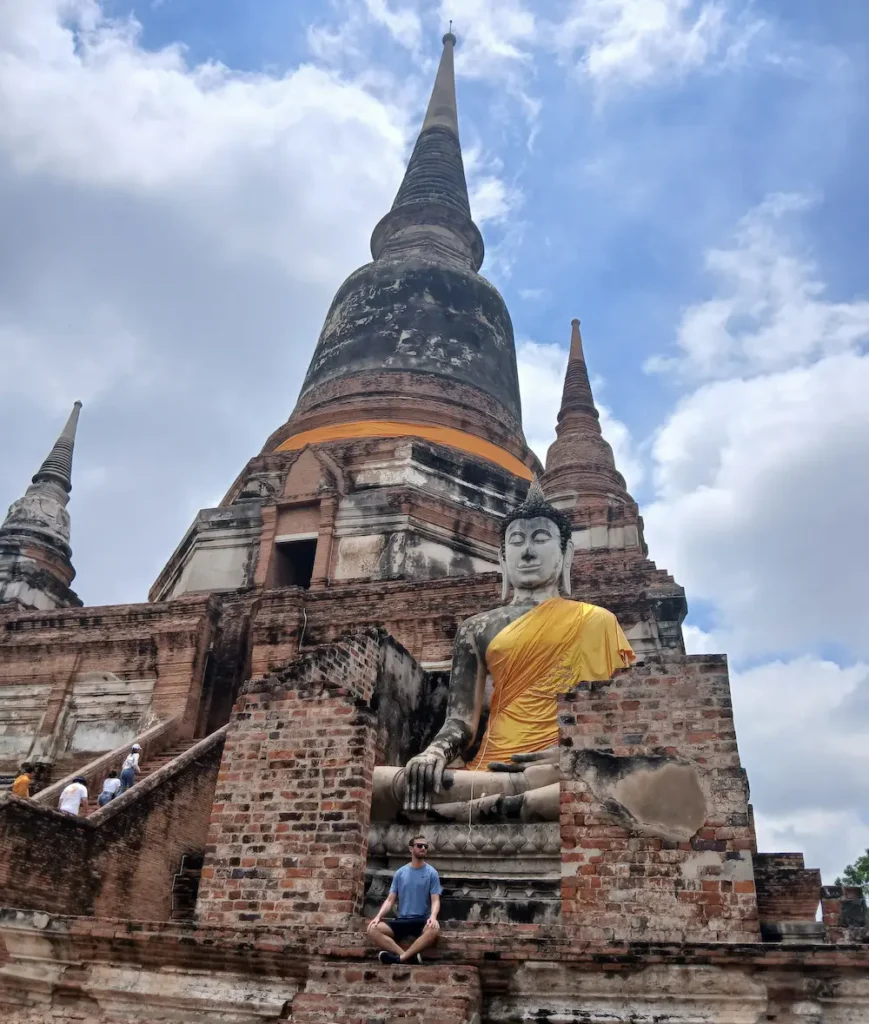
If you’re interested in Thai history, you shouldn’t miss the ancient capitals of the Kingdom of Siam. The ruins of Sukhothai and the temples of Ayutthaya preserve some of the country’s most important archaeological sites.
Ayutthaya is perfect for a day trip from Bangkok, while Sukhothai is worth visiting if you have more time to explore central Thailand.
You can read more about the ancient ruins of Sukhothai, the former capital of Thailand.
Khao Yai National Park
Khao Yai National Park is one of the best places to enjoy Thailand’s natural landscapes.
It has tropical forests, waterfalls, hiking trails and a wide variety of wildlife. If you love nature, it’s definitely somewhere to consider adding to your itinerary.
Find out more in my article about Khao Yai National Park.
Phuket, Krabi and the Phi Phi Islands
In the south of the country, you’ll find some of Thailand’s most famous beaches. Phuket is the largest island in the country and offers a huge range of beaches, restaurants, excursions and activities.
The Phi Phi Islands are famous for their turquoise waters, limestone cliffs and spectacular scenery. I also recommend visiting Ao Nang and Railay, in Krabi Province.
You can read more about the most famous beach in the world: Koh Phi Phi.
If you’re interested in local festivals, take a look at my article about the Phuket Vegetarian Festival.
Koh Samui, Koh Phangan and Koh Tao
These three islands in the Gulf of Thailand each have a very different personality. Koh Samui, Koh Phangan and Koh Tao are perfect destinations for enjoying beaches, diving, snorkelling and nature.
Koh Samui has a very developed tourist infrastructure, Koh Phangan combines quiet beaches with a famous nightlife scene (including the Full Moon Party), and Koh Tao is particularly popular with people who want to learn how to dive.
Read more about the islands of the Gulf of Thailand: Koh Samui, Koh Phangan and Koh Tao.
5. How to get around Thailand
One of the advantages of travelling around Thailand independently is that the country has a fairly well-developed transport network.
You can travel by plane, train, bus, taxi, tuk-tuk, ferry or boat. The best option will depend on the distance, your budget and how much time you have available.
Getting around Bangkok
Bangkok is an enormous city and traffic can be frustrating, especially during rush hour.
To avoid traffic jams, I recommend using public transport:
- BTS Skytrain: An elevated train that connects many shopping and tourist areas.
- MRT: Bangkok’s metro system, very useful for getting around the city.
- Airport Rail Link: Connects Suvarnabhumi Airport with central Bangkok.
- Chao Phraya Express Boat: Public boats that travel along the river and allow you to visit several temples and tourist areas.
You can also use taxis and apps such as Grab or Bolt. If you take a traditional taxi, make sure the driver uses the meter before starting the journey.
Tuk-tuks and taxis
Tuk-tuks are one of Thailand’s best-known forms of transport and an experience worth trying at least once. However, always agree on the price and route before getting in.
In Bangkok, some drivers offer very cheap rides in exchange for taking you to shops or businesses where they receive commissions. If you don’t want to make any stops, make it clear from the beginning that you want to go directly to your destination.
Taxis are usually more comfortable for longer journeys, but try to always use the meter or an app that shows you the price.
Buses and trains
To travel between cities, you can use buses, minibuses and trains.
Buses are usually comfortable and affordable, connecting practically all the main tourist destinations. Trains are another good option, especially for long journeys such as Bangkok to Chiang Mai.
One experience I recommend is travelling by overnight train. As well as saving you a night’s accommodation, it gives you the chance to enjoy a different kind of journey.
Domestic flights in Thailand
If you don’t have many days, domestic flights can save you a lot of time. There are connections between Bangkok, Chiang Mai, Phuket, Krabi and other tourist destinations.
Before booking, compare the final price, taking into account luggage, flight times and transfers to and from the airport.
Ferries and boats between the islands
If you’re planning to visit the Thai islands, you’ll need to use ferries or speedboats. Some companies worth checking out include:
Both offer boat connections and different transport combinations on certain routes. On many journeys, you can buy combined tickets that include a bus, ferry and, depending on the route, a transfer to your accommodation.
My advice is to compare schedules and conditions before booking, especially during the rainy season.
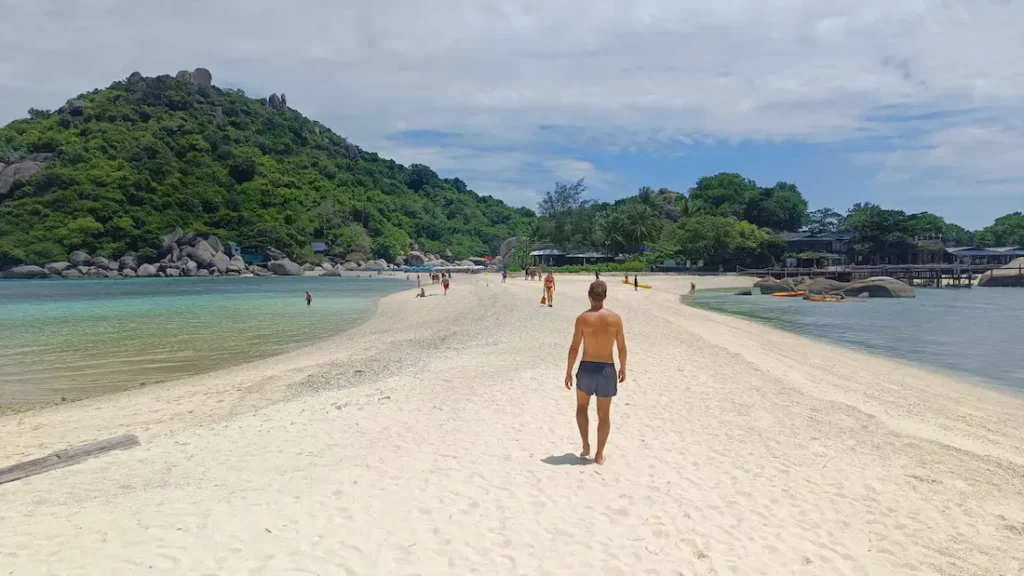
The crystal-clear waters of Nang Yuan Island, Koh Tao.
6. Tips for travelling around Thailand on a budget
Although Thailand is no longer as cheap as it was a few years ago, it’s still possible to explore the country on a limited budget.
Here are some tips that I use and that can help you save money while travelling around Thailand.
- Eat at local restaurants. Small family-run restaurants and markets are usually cheaper than tourist establishments.
- Use public transport. In Bangkok, the BTS and MRT are very useful for avoiding traffic jams and saving time.
- Compare excursions. Don’t book the first activity you’re offered. Ask around and check what’s included in the price.
- Avoid changing destinations constantly. Transport costs can end up taking up a significant part of your budget.
- Book in advance during the high season. This is especially important on the most popular islands, where accommodation can fill up quickly.
- Check bank fees. Choosing the right bank card can help you save quite a bit during your trip.
- Combine popular destinations with less well-known places. You don’t have to visit only the most famous spots to enjoy Thailand.
If you have time, I recommend getting away from the most touristy areas and discovering the more authentic side of Thailand.
You can also read my article about the lesser-known side of Thailand.
7. Thai culture and customs
One of the things I like most about Thailand is its culture and the kindness of many of the people you meet while travelling.
However, there are a few Thai customs and traditions worth knowing about to avoid awkward situations and show respect for the local culture.
Here are some of the most important ones:
- Take off your shoes before entering temples and homes when required.
- Dress respectfully when visiting religious sites. Shoulders and knees are generally expected to be covered.
- Don’t point your feet at other people or religious images.
- Avoid touching other people’s heads, as the head is considered a particularly important part of the body.
- Respect Buddha images and religious sites.
- Stay calm when you have a problem. Raising your voice or losing your temper rarely helps.
- Smile and be polite. A respectful attitude always makes interactions easier.
One custom you’ll see everywhere is the wai, the traditional Thai greeting in which people press their palms together and slightly bow their heads. You don’t need to use it all the time, but understanding its meaning will help you appreciate the country’s culture.
You can also learn a few Thai words and expressions to get by:
- Sawasdee krap/kha: Hello.
- Khop khun krap/kha: Thank you.
- Mai pen rai: Never mind / It’s okay.
- Mai pet: Not spicy.
- Aroi mak: It’s delicious.
- Mai ao krap/kha: No, thank you / I don’t want it.
Remember that men generally use krap and women use kha.
8. Going out in Thailand
If you enjoy going out, Thailand is one of the liveliest destinations in Southeast Asia.
You’ll find bars, nightclubs, beach parties and night markets in practically every tourist destination.
Bangkok nightlife
In Bangkok, you shouldn’t miss Khao San Road, one of the best-known streets among backpackers. It’s full of bars, restaurants, music, street-food stalls and people from all over the world.
You’ll also find areas with rooftop bars on top of skyscrapers, perfect for enjoying views of the city.
Parties on the Thai islands
If you’re looking for a beach-party atmosphere, Koh Phangan is one of the best-known destinations thanks to the Full Moon Party, an event held around the full moon.
Phuket also has a very lively nightlife scene, especially in the Patong area. On other islands, you’ll find smaller bars and much more relaxed parties.
Tips for enjoying the nightlife
- Always keep an eye on your drinks and belongings.
- Check prices before ordering.
- Be careful with tourist shows that may involve compulsory drinks or inflated prices.
- Never drive after drinking. If you’re caught driving under the influence, you can face a heavy fine.
- Respect local people and customs.
If you’re trying to save money, remember that alcoholic drinks can be considerably more expensive than a meal at a local restaurant. Enjoy your night out, but always use common sense.
9. Safety in Thailand: important tips
One of the questions people often ask when planning their first trip is whether Thailand is a safe country to travel around.
In general, it’s a very popular destination with travellers from all over the world, and you can visit many tourist areas without any problems. However, as in any country, there are risks you should be aware of.
Watch out for tourist scams
In the most popular areas, you may come across people trying to sell you excursions, transport or services at inflated prices.
In Bangkok, for example, some tuk-tuk drivers may offer very cheap rides in exchange for taking you to shops where they receive commissions.
My advice is to always agree on the price and route before getting in.
Be careful with motorbikes
This is one of the most important pieces of advice I can give you.
Renting a motorbike is very common in Thailand, especially for exploring the islands, but road accidents are frequent and can have serious consequences.
Before renting a motorbike, keep the following in mind:
- You need the appropriate driving licence and, where required, an international driving permit.
- Always wear a helmet.
- Check the condition of the vehicle before setting off.
- Make sure your travel insurance covers riding a motorbike and the activity you’re planning.
- Don’t ride if you have no experience.
Don’t rent a motorbike simply because everyone else is doing it. If you don’t have experience, it’s much better to use taxis, public transport or hire a driver.
Get good travel insurance
Although it’s sometimes overlooked, travelling with good travel medical insurance is essential. Private hospitals in Thailand can provide excellent care, but medical expenses for foreigners can be very high.
Check that your policy includes medical assistance, hospitalisation, repatriation and any activities you plan to do.
Heymondo travel insurance with 10% off
Before travelling to Thailand, I recommend taking out good travel insurance to protect yourself against possible illnesses, accidents or unexpected situations. Through Sin Destino Aparente, you can get 10% off Heymondo travel insurance by using our exclusive Heymondo link.
If you’d like to find out more about its coverage, benefits and plans, you can also read our article about Heymondo travel insurance, where we explain everything in more detail before you decide.
Protect your belongings
When using tourist transport, visiting markets or walking through crowded areas, keep an eye on your personal belongings. Keep your passport somewhere safe and avoid handing it over as a deposit when renting vehicles.
It’s also a good idea to check the Spanish Ministry of Foreign Affairs travel advice before leaving, as there may be specific restrictions or warnings for certain regions.
10. Final tips for travelling around Thailand independently
After travelling around Thailand, living there and getting to know different parts of the country, there are a few things I’d like to recommend before finishing this guide.
- Don’t try to see everything in one trip. Thailand has so much to offer that it’s better to enjoy a few places rather than spend your entire holiday travelling from one destination to another.
- Leave room for spontaneity. Some of the best moments happen when you change your plans and discover somewhere that wasn’t on your itinerary.
- Try the local food. Don’t limit yourself to Pad Thai. There’s an enormous variety of dishes and flavours worth discovering.
- Respect the local culture and customs. Travelling is also about learning and adapting to different ways of life.
- Don’t neglect your safety. Especially when driving, booking excursions or enjoying the nightlife.
And above all, don’t be afraid to travel around Thailand independently. It’s a fantastic destination for anyone looking to start discovering Asia on their own.
I hope these tips for travelling around Thailand help you prepare for your adventure and that you enjoy the country as much as I have.
Need help organising your trip around Thailand?
After more than a year living in Thailand, I’ve started working with different local agencies to help other travellers discover the island and its surroundings. If you’re planning a trip around Thailand, you can get in touch with me and I’ll be happy to help you find an option that suits your trip.
By the way, if you’ve never been to Thailand before, you might also be interested in these other articles:
- 14-day Thailand itinerary: a route covering the essential places
- 2–3 month Southeast Asia itinerary: Thailand, Laos, Cambodia and Vietnam
- Working as an English teacher in Thailand: a unique experience
Have a great trip and see you in Thailand!
Take some flexibility, humor and patience with you. Come expecting the unexpected, be prepared to go with the flow, be prepared for an adventure rather than a vacation.
– Lonely Planet –


Hi, I’m Marcos.
I’ve been travelling around Asia since 2011 and have spent much of that time living in China, learning Chinese and exploring the country independently.
On Sin Destino Aparente, you’ll find practical travel guides, firsthand experiences and useful tips to help you plan your own adventure.
I currently live in Phuket, Thailand, and organize personalized trips to China for travellers looking to discover the country beyond the usual tourist routes.
If you have any questions, don’t hesitate to contact me:
contacto@sindestinoaparente.com
Inst: marcossinpolo


